‘Be a voice to the voiceless’
This post was first written for the UN refugee agency website.
I started writing poetry in Arabic when I was 13. When I came to the UK in 2018 I started writing poetry in English, and used it whilst pregnant with my daughter to work through some difficult experiences I had as a child.
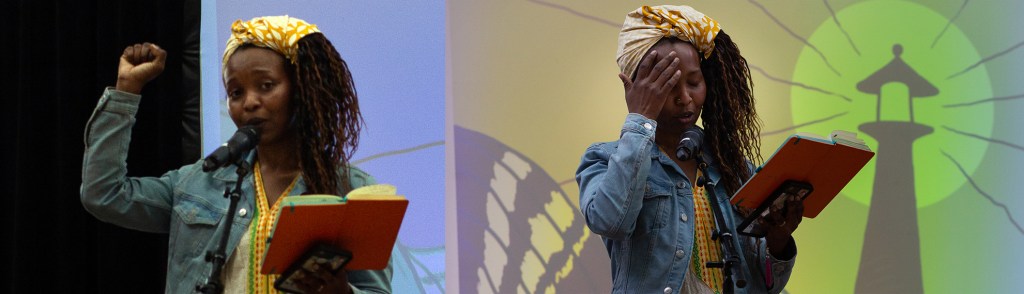
My first English poem, ‘Dear Inner Child’ explored my experiences during my formative years, being a survivor of the Sudanese civil war[NA1] . During my maternity leave my friend, singer and songwriter, Rebecca Dunn, hosted an open mic event in celebration of International Women’s Day, in Aberdeen, Scotland. So, I decided to perform my poetry for the first time. Since then, I’ve attended this event and have been involved in many other spoken word events for the last few years in Aberdeen,
My poetry explores multiple different themes, from mental health, personal issues and experiences, sexual abuse and the refugee crisis – causes close to my heart.
My poem entitled ‘Daughter to the Nile’ focuses on the refugee crisis, highlighting one individual in particular. The poem discusses the experience of someone who was a Sudanese refugee and fled across the Mediterranean Sea but unfortunately passed away in a hotel in Glasgow due to a mental illness. My poetry will always have this raw element. When I was 25 my Grandad passed away, and the last thing he said to me was ‘be a voice to the voiceless’ – something that really resonated with me. My poetry is a gift, and if I cannot contribute in any other way my poetic voice can be used in this manner.
Since the Sudanese revolution in 2018 I have used my voice. My daughter was strapped to my chest when I went out protesting and saying my poetry.
Another big theme throughout my poems is the theme of home. The security you find in the UK is something that we strive for in Sudan – we have been going through a peaceful revolution and my family still. lives there. I am often torn between two places. This poem discusses the tension between these two places.
I am a very homely person – I try to create a little environment of what home means to me. Whether it’s bringing things which remind me of home in Sudan; hibiscus, my mum’s traditional garments etc. But to me, home is a feeling – it’s safety and security, it’s finding food on the table, it’s a nice warm blanket and education for my daughter – and not worrying about tomorrow. Home is the small things that people often take for granted. Walking down the street without feeling that you’re going to be harassed.
I love Sudan where I come from, but there are lots of negative things that I would like to change – especially when it comes to women’s rights.
Noon Salah Eldin
 Eldin&Love